
Oh to be in Darren Aronofsky’s sick and twisted, little mind. The purpose of Aronofsky “hip-hop” style of editing in Requiem for a Dream is to consume and forcibly invite the audience into addictive personalities of the four central protagonists. The editing in the beginning is equally paced and distributes shots nicely, but by the end of the film, the editing is rushed and face paced to portray the self-destructive nature of the characters after they keep sinking to the bottom of their crisis.

Whenever the red dress is pictured, spliced, or edited into a scene, it is meant to represent the unachievable happiness that the characters continually chase after in this film. This is a prime example of a tonal montage, where shots are edited together to create an overall emotional atmosphere in creating the series of shots or scenes. Every time the red dress is shown or mentioned is meant to evoke this melancholy feeling that the audience roots for these characters to get better, but deep down, they know it is just a fantasy. This is especially true with the relationship between Sara and Harry, as Sara uses the red dress as a symbol of the life and relationship she used to have with her and how desperately she wants it back.

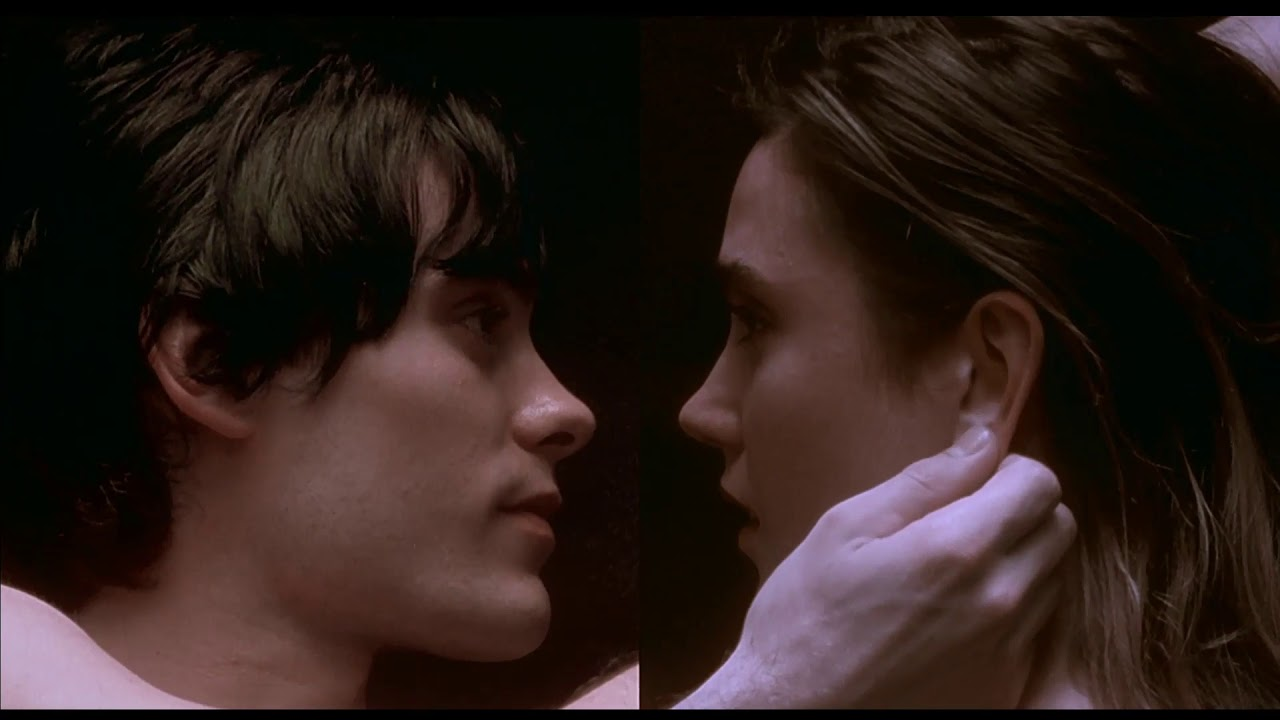
Despite Harry and Marion verbally displaying their love for each other, this scene that uses disjunctive editing would prove otherwise. In the first proper introduction of the film’s primary romantic couple, the use of the split screen here illustrates this disjointed and dysfunctional relationship that again is built upon an illusion of love and happiness. While both characters are physically present in the scene, neither of the characters are in each others shot, and their intimacy is restricted by the split screen, causing a rift in their relationship. They’re both present, but they real Harry and Marion are ever present in one another’s lives.

The “high” or “drugged” montages could be analyzed as being a work of rhythmic montage. The majority of these montages where the audience sees the characters self-sabotaging their happiness and spiraling further into a point of no return is often accompanied by a percussionist orchestra in the background, where pills bottles popping opening mimic the sounds of woodblocks. These montages become more like clockwork as the characters begin to descend and as their personalities become more dependent and addictive towards their drug.

This scene with Sara perfectly demonstrates the use of intellectual montage in film. Intellectual montage is often used to juxtapose two somewhat unrelated images, and while Sara has a clear relation to her diet pills, there is a clear distinction between the two shots: good and evil. Sara wants to appear “presentable” and wants to be the idealistic mother for her son, and Sara’s good intentions often is blinded by her vanity, leading her to the evil, which in this case in her pills. The pills, like the other drugs in the film, are self-destructive, and they actual obstruct Sara from getting the things she want, such as her son and her game show appearance.

When Harry and Tyrone are sealing drugs, their montage is what would be categorized as a metric montage. What would takes months of planning, takes up seconds on the audience’s screen time. Their plans and inner workings of drug dealing and selling are important to them, but to the audience, their trials and tribulations are time lapsed, seeming minuscule or insignificant in the long run. While it is a quick buck for the two to grab at the time, it cannot satisfy the addictions they either consciously or subconsciously feed.
Leave a Reply