
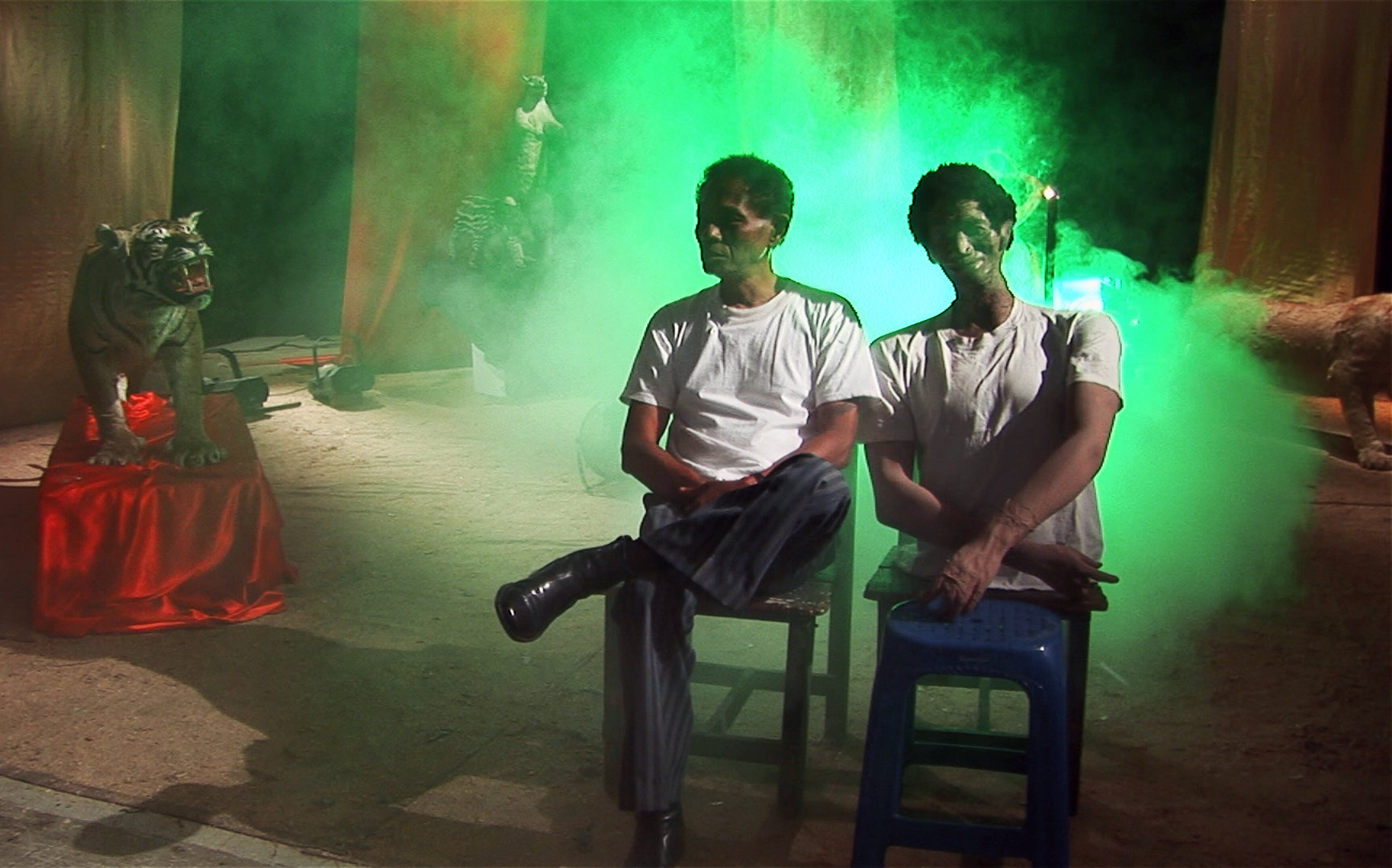
The Act of Killing uses the documentary genre to exploit and horrors of the Indonesian mass killings of 1965–66, centering the narrative around the killers responsible for the deaths of 1.2 million accused (not convicted) communists. Filmmaker, Joshua Oppenheimer, gives the resources to the celebrated killers to realize and actualize their crimes through their perspectives.

The Act of Killing falls under two out of the six modes of documentary filmmaking, reflexive and performative. Through these modes of documentary filmmaking, Joshua Oppenheimer is trying to convey the message that propaganda and the “winners” in history can shape perspectives, creating a false ideology of events.

Reflexive mode in documentary filmmaking often blurs the lines between reality and fiction, deceiving viewers and making them question the documentary from their own perspectives of reality and the situation. With the reflexive mode in The Act of Killing, Joshua Oppenheimer uses the opportunity to give crime lords the ability to express their makings of these horrific situations. As the crime lords are telling their history from the “winners” perspective, the audience is often left questioning how much of what they say is true due to the often fanciful and flamboyant light it is depicted in.

As history is more often than not told by the winners, the reflexive mode illustrates the only side that is alive to tell their story, and the way that these war criminals depict their crimes and murders are comical in a way as they perceive their acts to almost be romanticized in the genre of film they feel best enhances their story; however, for the viewer, this is all the more horrific because these malicious figures view these heinous acts as something to be taken lightly, as almost it was scripted for them to perform and act on for show.

The performative mode allows the subjects being documented to reject traditional forms of documentary storytelling and allows the subject to be expressive in retelling their personal experiences from their perspectives or how the experiences have shaped their perspective. Again, no better way is this depicted than in The Act of Killing. In Western culture, a romanticization around violence and graphic nature has assembled in film and television, and in turn, this romanticization has given other countries and parts of the world this terrible (yet honest) first impression of America.

Movies like The Godfather, Scarface, Natural Born Killers and superhero movies like Batman (1989) and Batman Returns (the best Batman films), when seen through a social learning theory lens, glorify the acts of murder, mayhem, chaos, and gratuitous violence. These movies morph the vision that society views those malicious acts as something that is played off for dramatic or theatrical effect. Mix this ideology with the anti-communist propaganda being pumped through Indonesia during the 1960s (and to this day), that’s the perfect recipe for murderers believing themselves to be the heroes of this story. The performative mode allows these men to use their visions and recollections of what happened during the killings to fit the narrative that they have and Indonesia military propaganda have convinced them to believe to have happened. They were the heroes; they did their part to save the country; and they should be rewarded and praised for their actions.

Leave a Reply